NeuroNikah Editorial
Marriage & Neurodiversity Writer
A promising introduction can feel reassuring at first: shared faith, respectful conversation and a clear intention to marry. Yet life goals compatibility is often what determines whether that early ease can become a stable, compassionate partnership after nikah.
For autistic and ADHD Muslims, this conversation matters for another reason too. Marriage affects daily routines, communication, sensory comfort, energy, family relationships and practical responsibilities. These are not minor preferences to hide until later. They are part of building a home where both people can live with dignity and feel understood.
What life goals compatibility really means
Life goals compatibility is not about finding someone with an identical plan for every year ahead. Two people may have different careers, interests or personalities and still make an excellent match. It means that the direction you each want to travel in is broadly compatible, and that you can discuss differences honestly and kindly.
For a Muslim seeking marriage, faith is central to that direction. You may both value salah, halal income, modesty, family ties and raising children with Islamic principles, but practise these values in different ways. The aim is not to interrogate one another or look for perfection. It is to understand what these commitments look like in everyday life.
Compatibility also includes practical questions. Where do you hope to live? How do you see work and household responsibilities? Would you like children, and if so, what kind of family life do you hope to create? How involved do you expect parents and relatives to be? A clear answer is helpful, but a thoughtful willingness to work through uncertainty matters too.
Why shared values need practical detail
Many people say they want a peaceful home, a supportive spouse or a family-centred life. These are meaningful hopes, but they can mean very different things from one person to another.
For one person, a peaceful home may mean inviting relatives for dinner every weekend. For another, it may mean protected quiet time after work and plenty of notice before visitors arrive. Neither view is wrong. Difficulty begins when assumptions remain unspoken, then get interpreted as rejection or a lack of care.
The same applies to ambition. A person may want to build a demanding career, complete further study or start a business. Their potential spouse may be happy to support that path, but they need to discuss its likely effect on time, finances, rest and family plans. Agreement is not always necessary at the first conversation. Mutual realism is.
This is especially valuable when neurodivergent needs are involved. An autistic person may need predictable routines, low-sensory spaces or recovery time after social events. Someone with ADHD may thrive with flexibility but need shared systems for appointments, budgeting or household tasks. These needs do not make anyone less ready for marriage. They simply deserve the same openness and respect as any other part of a person’s life.
Life goals compatibility in a neurodiversity-aware marriage search
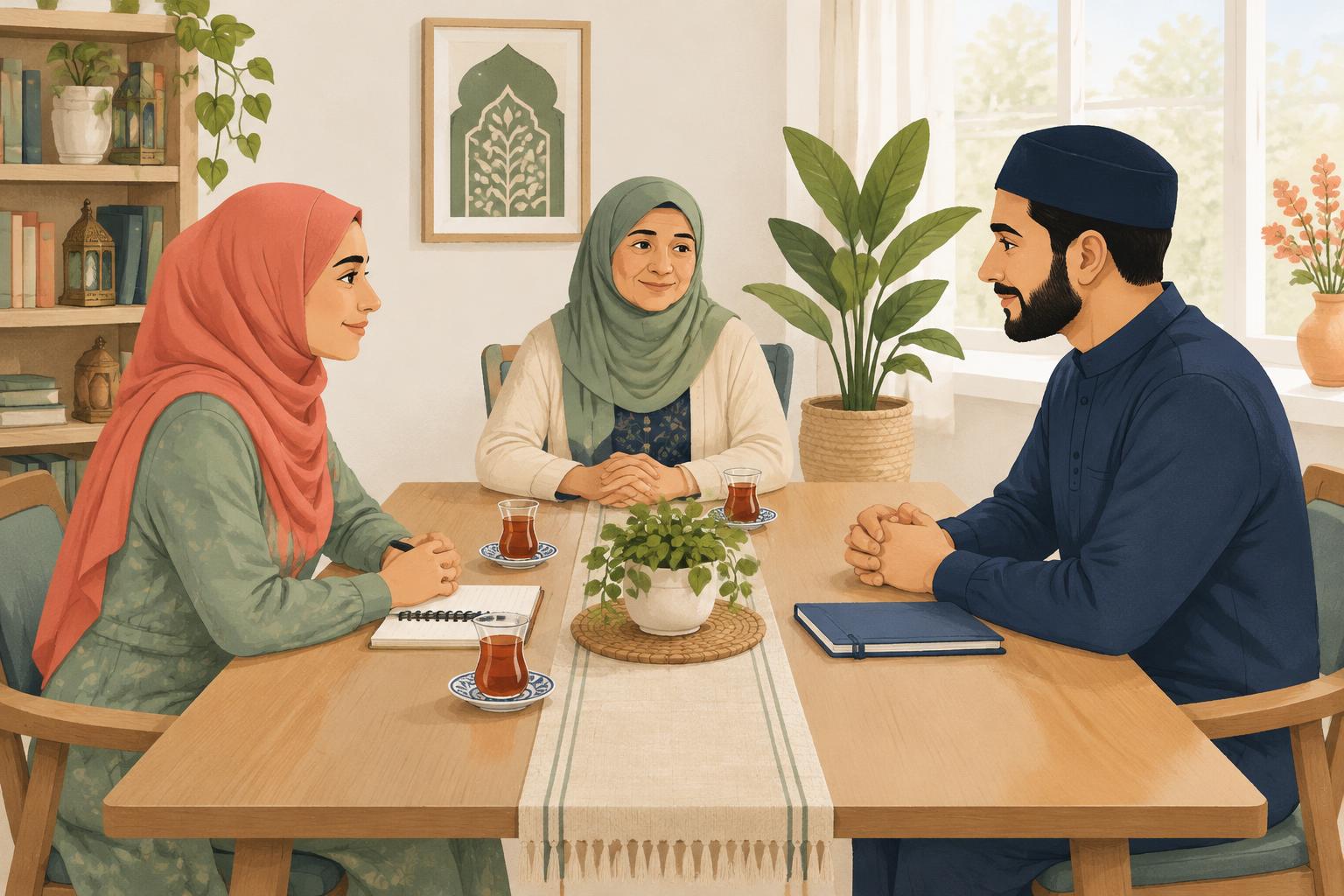
A good marriage introduction should make room for direct communication without forcing people to disclose everything immediately. You are allowed to take time, involve a wali or trusted family member where appropriate, and ask questions in a way that feels manageable.
Talk about the shape of ordinary life
Grand plans matter, but ordinary Tuesdays matter too. Discuss how you each prefer to communicate when busy, upset or overstimulated. Ask about sleep patterns, work schedules, social energy and the amount of structure that helps you feel settled.
You might say, “I need a little time to process difficult conversations before I respond properly,” or, “I find last-minute changes stressful, so advance notice helps me show up well.” This is not asking for special treatment. It is giving a potential spouse useful information about how to build a caring relationship with you.
It can also help to ask what support feels respectful to the other person. Some people welcome reminders and practical planning. Others experience frequent reminders as pressure. The best approach depends on the individual, not a label.
Discuss family expectations early enough
Marriage often joins two family cultures as well as two individuals. In Great Britain, this may include expectations around living arrangements, visits, Eid, financial support for relatives, language, food and community involvement.
These conversations can feel sensitive, particularly when family approval is important. Still, avoiding them does not make the expectations disappear. If one person hopes to live near parents and another wants more distance and independence, it is kinder to recognise that early.
For neurodivergent Muslims, family gatherings may also bring sensory and social demands. It is reasonable to discuss how you would handle busy events, unplanned visits or periods when one spouse needs a quieter weekend. A caring partner will not treat these boundaries as an insult to their family.
Be honest about money, work and responsibility
Financial compatibility is not simply about earning the same amount. It is about honesty, priorities and a shared understanding of responsibility. Discuss your attitude towards saving, debt, giving charity, spending, career changes and supporting dependants.
There is no single correct arrangement for every Muslim household. One couple may prefer one spouse to work full-time while the other manages more of the home. Another may share paid work and domestic tasks. What matters is that neither person enters nikah expecting an arrangement that the other has never agreed to.
Practical tools can reduce unnecessary strain. A shared calendar, written task list, regular budget check-in or clear division of chores can be deeply supportive. Structure is not unromantic. For many couples, it creates the space to be more patient and affectionate.
Questions worth asking before commitment
The purpose of these questions is not to turn a marriage search into an interview. They give both people a chance to be known beyond surface-level compatibility. In a calm, halal setting, consider asking how your potential spouse imagines daily life in five years; what they need when stressed; how they make major decisions; what role faith and community play in their week; and what they hope family life will feel like.
You can ask about children with care and sensitivity, including whether they hope to have them, their thoughts on timing and how they approach parenting. If this is an area of uncertainty or pain, honesty can still be gentle. It is better to acknowledge a difficult subject than to imply certainty you do not have.
Notice not only the answers, but the experience of the conversation. Do you feel able to ask a clarifying question? Can they hear a different perspective without becoming dismissive? Are they interested in understanding your needs, or are they waiting for you to become more convenient?
When differences can work, and when they may not
Some differences are workable through planning and goodwill. An introvert and an extrovert may balance one another well if they respect each other’s social limits. A highly organised person and a more spontaneous person may create practical systems that suit them both. Different interests can bring freshness to a marriage rather than distance.
Other differences need more serious attention. Conflicting views on faith practice, children, location, financial responsibility or family boundaries can affect the foundations of married life. Love or attraction does not remove the need to face these issues honestly.
It also matters if one person repeatedly minimises the other’s autism, ADHD or stated support needs. You should not have to mask constantly, tolerate overwhelm in silence or prove that your needs are legitimate to be considered marriageable. A good match will approach difference with adab, patience and a genuine desire to learn.
Give clarity time to grow
A structured marriage process can make these conversations less overwhelming. NeuroNikah is built around the idea that Muslim adults should be able to seek nikah with both Islamic boundaries and neurodiversity-aware consideration in place.
There is no benefit in rushing towards certainty because a conversation has gone well, or because family pressure makes time feel limited. Take the appropriate steps, seek guidance through istikhara, consult trusted people and observe whether words are matched by consistent conduct.
The right person will not require you to become less yourself to make the future seem easier. A meaningful match is one where both of you can name the life you hope to build, make room for each other’s needs and move towards nikah with honesty, calmness and mutual mercy.